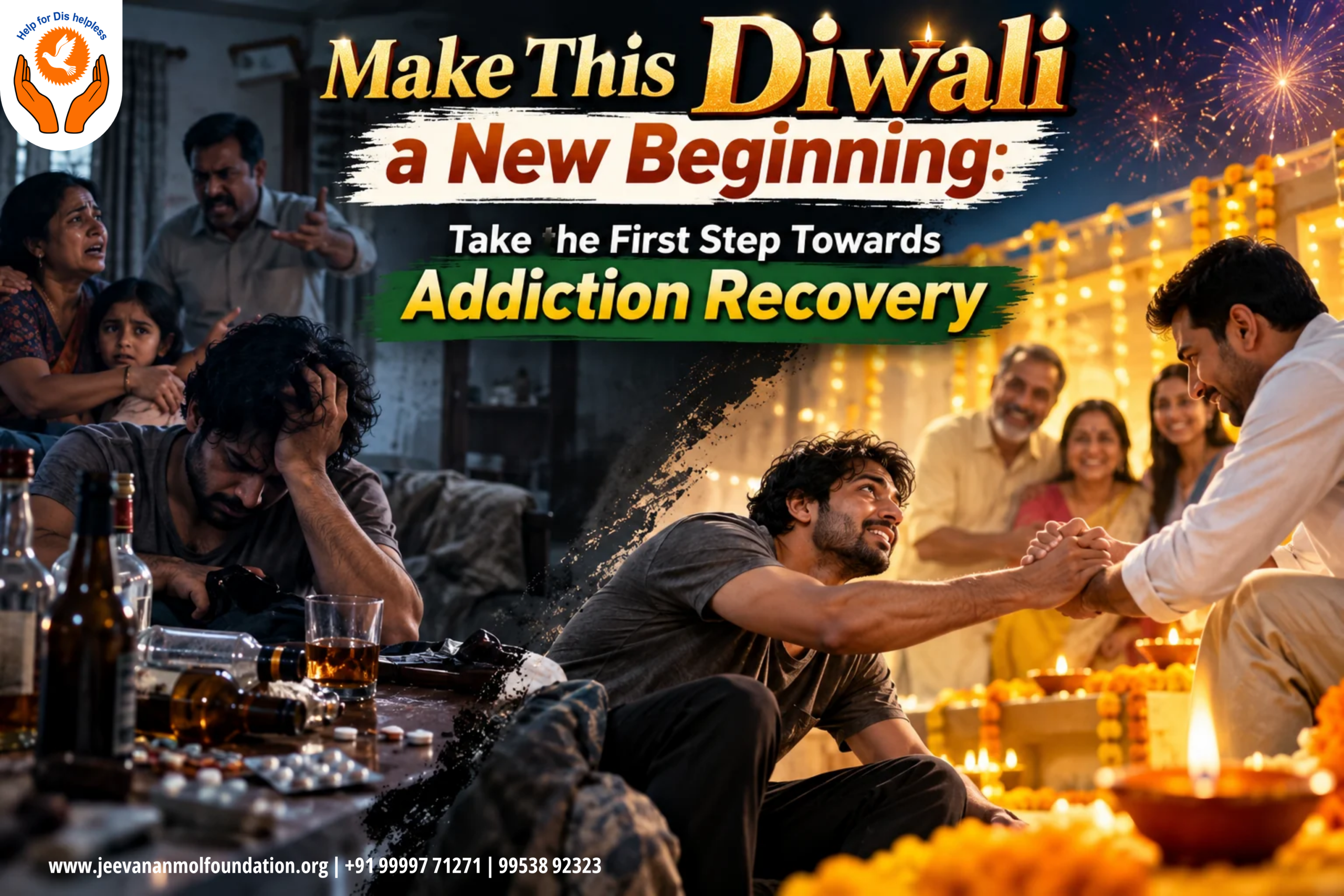
Make This Diwali a New Beginning: Take the First Step Towards Addiction Recovery
Diwali is a festival of lights, hope, happiness, and new beginnings. Homes are decorated, families come together, and people celebrate the victory of light over darkness. But for some families, the festive season can also bring emotional challenges, especially when a loved one is struggling with alcohol or drug addiction.
Behind the celebrations, many families silently deal with broken relationships, financial difficulties, emotional stress, and the uncertainty of what tomorrow will bring. They may wish to see their loved one return to a healthier life but struggle to understand where to begin.
This Diwali, let’s look beyond the decorations and celebrations. Let’s talk about something that can genuinely transform lives: addiction recovery.
Whether you are personally struggling with substance use or worried about someone in your family, remember that seeking help is not a sign of weakness. It is the beginning of a healthier and more hopeful future.
Understanding Addiction: Why a New Beginning Matters
Addiction is not simply a bad habit or a lack of self-control. It is a complex medical condition that affects the brain, behaviour, physical health, and emotional well-being.
What may begin as occasional alcohol consumption or experimentation with drugs can gradually develop into a pattern of substance use that becomes difficult to control.
Over time, addiction can affect almost every aspect of life:
- Physical health: Substance use can damage vital organs, weaken immunity, and increase the risk of serious medical conditions.
- Mental health: It may contribute to anxiety, depression, mood changes, and difficulties with concentration.
- Family relationships: Repeated arguments, broken promises, and loss of trust can create emotional distance.
- Financial stability: Money spent on substances can affect savings, household expenses, and financial responsibilities.
- Professional life: Poor concentration, absenteeism, and declining performance can affect education and employment.
The difficult part is that addiction rarely affects only one person. It often impacts parents, spouses, children, siblings, and everyone who cares about the individual.
However, the story doesn’t have to end there.
With appropriate medical treatment, counselling, rehabilitation, and family support, recovery is possible.
Why Diwali Can Be the Right Time to Think About Recovery
Diwali represents renewal, positivity, and the hope of a better tomorrow.
For someone struggling with addiction, it can also be an opportunity to reflect on their health, relationships, and future.
Here are a few reasons why the festive season can encourage positive change.
1. A Chance to Reconnect with Family
Addiction can create emotional distance between individuals and their families.
Parents may feel helpless, spouses may lose trust, and children may struggle to understand changing behaviour.
Diwali brings families together, creating opportunities for meaningful conversations.
Instead of focusing on past mistakes, family members can encourage one another to move towards healthier choices.
A simple conversation expressing care and concern can sometimes become the first step towards seeking professional help.
2. An Opportunity to Leave Unhealthy Habits Behind
Many people make resolutions during festivals and special occasions.
Some decide to improve their health, others focus on financial stability, and many commit to spending more time with loved ones.
For someone struggling with substance use, this can be an opportunity to acknowledge the problem and explore treatment options.
However, addiction should not be treated as something that can always be overcome through a festive resolution or willpower alone.
Professional guidance is important, particularly when physical dependence or withdrawal symptoms are involved.
3. A Reason to Rebuild Hope and Confidence
People struggling with addiction may experience guilt, shame, isolation, and a loss of confidence.
They may believe that their relationships are permanently damaged or that returning to a normal life is impossible.
But recovery can open the door to new possibilities.
With the right support, individuals can gradually rebuild their confidence, develop healthier habits, reconnect with their families, and work towards personal goals.
A difficult past does not have to determine someone’s future.
5 Signs That You or Your Loved One May Need Addiction Support
Recognizing addiction early can make it easier to seek appropriate help.
Families should pay attention to persistent behavioural and physical changes rather than dismissing them as temporary problems.
1. Increasing Dependence on Alcohol or Drugs
Someone may initially use alcohol or drugs occasionally, but gradually begin depending on them to relax, sleep, manage stress, or cope with everyday situations.
They may find it increasingly difficult to stop despite wanting to.
2. Sudden Behavioural Changes
Addiction may be accompanied by:
- Frequent mood swings
- Irritability and anger
- Secretive behaviour
- Social withdrawal
- Lack of motivation
- Unexplained absences
These changes can affect relationships and daily responsibilities.
3. Neglecting Family and Professional Responsibilities
A person struggling with addiction may begin missing work, neglecting household responsibilities, or losing interest in education and personal goals.
Substance use may gradually become more important than everyday commitments.
4. Financial Difficulties
Repeated requests for money, unexplained expenses, borrowing, and increasing debt may indicate that substance use is affecting financial stability.
5. Failed Attempts to Quit
One of the most important warning signs is repeatedly trying to stop but being unable to maintain the change.
If someone continues using substances despite health complications, relationship problems, or professional difficulties, a professional assessment is recommended.
Important: These signs do not independently establish an addiction diagnosis. A qualified healthcare professional can assess the situation and recommend appropriate support.
How to Take the First Step Towards Addiction Recovery
Accepting the need for help is often one of the most difficult parts of recovery.
Many individuals delay treatment because of fear, embarrassment, social judgment, or uncertainty about what happens inside a rehabilitation centre.
Here are some practical steps that can help.
Step 1: Acknowledge the Problem
The first step is recognizing that substance use may have become difficult to control.
Avoid making excuses or ignoring repeated warning signs.
Acknowledging the problem doesn’t mean accepting defeat. It means becoming ready to explore solutions.
Step 2: Speak to Someone You Trust
Opening up about addiction can feel uncomfortable.
However, talking to a trusted family member, friend, doctor, or counsellor can reduce the feeling of isolation.
If you are supporting someone else, approach the conversation with empathy rather than blame.
Instead of saying:
“You have destroyed your life and our family.”
Try saying:
“We care about you. We can see that you’re struggling, and we want to help you get better.”
A supportive conversation can make seeking professional help feel less frightening.
Step 3: Seek Professional Counselling
Addiction can have biological, psychological, and social causes.
Professional counselling helps individuals understand the factors contributing to substance use and identify healthier coping strategies.
A qualified professional can also assess whether medical treatment, psychiatric support, or rehabilitation is appropriate.
Step 4: Consider a Suitable De-Addiction Programme
Depending on the individual’s condition, a structured de-addiction programme may be recommended.
A suitable rehabilitation programme may include:
- Medical assessment
- Medically supervised detoxification, when required
- Individual counselling
- Psychological support
- Group therapy
- Family counselling
- Relapse-prevention planning
- Healthy lifestyle activities
Treatment should always be tailored to the individual’s medical needs and substance-use history.
Step 5: Commit to Long-Term Recovery
Recovery doesn’t end when a person completes a rehabilitation programme.
Maintaining progress requires continued effort, professional follow-up, healthy routines, and a supportive environment.
The goal is not simply to stop using substances. It is to build a life in which substance use no longer controls everyday decisions.
How Families Can Support a Loved One During Recovery
Family support can make a meaningful difference in the recovery journey.
However, supporting someone with addiction requires patience, understanding, and healthy boundaries.
Avoid Blaming and Shaming
Repeated criticism and humiliation can increase emotional distress and make someone less willing to seek help.
Focus on the behaviour and its consequences rather than attacking the individual’s character.
Encourage Professional Treatment
Don’t rely entirely on promises that someone will quit tomorrow.
Encourage them to speak with qualified professionals and understand the available treatment options.
Create a Positive Home Environment
A supportive environment can help individuals maintain healthier routines.
Families can encourage:
- Regular meals
- Proper sleep
- Physical activity
- Positive social interactions
- Counselling sessions
- Healthy hobbies
Set Healthy Boundaries
Supporting recovery does not mean accepting harmful behaviour.
Families should establish clear boundaries around money, responsibilities, aggression, and substance use at home.
If there is violence or a risk of harm, prioritize everyone’s safety and seek professional assistance.
Participate in Family Counselling
Addiction affects relationships, and rebuilding them requires effort from everyone involved.
Family counselling can help improve communication, rebuild trust, manage conflict, and create realistic expectations.
Why Medical Support Is Important During Addiction Recovery
One common mistake is assuming that someone can simply stop using alcohol or drugs without medical assistance.
This can be dangerous, particularly for individuals with physical dependence.
For example, suddenly stopping alcohol after prolonged heavy consumption can cause serious withdrawal complications, including seizures and delirium.
Withdrawal from certain other substances can also require medical attention and supportive treatment.
Medical professionals can evaluate:
- The substance being used
- Duration and frequency of use
- Physical dependence
- Withdrawal risks
- Existing medical conditions
- Mental health concerns
Based on this assessment, they can recommend an appropriate treatment plan.
Never attempt to manage potentially dangerous withdrawal symptoms through home remedies, yoga, meditation, or willpower alone.
If someone experiences seizures, unconsciousness, breathing difficulties, severe confusion, or a suspected overdose, seek emergency medical assistance immediately.
What Happens After Rehabilitation?
Completing rehabilitation is an important achievement, but returning to everyday life can bring new challenges.
Individuals may encounter familiar environments, old social circles, emotional stress, or situations associated with previous substance use.
This is why aftercare and relapse prevention are important parts of recovery.
Some useful approaches include:
1. Maintain a Healthy Routine
Regular sleep, balanced nutrition, exercise, and meaningful daily activities can help create structure.
2. Avoid High-Risk Situations
Identify environments, people, and circumstances that may increase the risk of returning to substance use.
3. Continue Counselling
Ongoing professional support can help individuals manage emotional difficulties and address challenges as they arise.
4. Build Supportive Relationships
Spend time with people who encourage healthy choices and respect recovery goals.
5. Recognize Warning Signs
Changes in mood, isolation, cravings, or returning to old patterns should be taken seriously.
A relapse does not mean recovery is impossible. It is a reason to reconnect with professional support and reassess the treatment plan.
Celebrate a Drug-Free and Healthier Diwali
Diwali celebrations often involve social gatherings, parties, and alcohol consumption.
For someone recovering from addiction, these situations may create additional challenges.
Families can make celebrations more supportive by focusing on activities that don’t revolve around alcohol or other substances.
Here are some ways to enjoy a healthier Diwali:
- Celebrate with family and close friends.
- Organize alcohol-free gatherings.
- Enjoy traditional sweets and festive meals.
- Participate in prayers and cultural activities.
- Spend time on hobbies and outdoor activities.
- Encourage positive conversations.
- Respect the recovery needs of individuals who prefer to avoid certain social situations.
A meaningful celebration doesn’t require alcohol or drugs.
Sometimes, the greatest happiness comes from being present, healthy, and surrounded by people who genuinely care.
This Diwali, Give Yourself or Your Loved One the Gift of a New Beginning
Festivals remind us that darkness doesn’t last forever.
The same message applies to addiction recovery.
Someone who is struggling today can gradually rebuild their life with appropriate treatment, emotional support, and a willingness to move forward.
A family dealing with addiction can rebuild trust. A person who has lost confidence can rediscover their abilities. Relationships damaged by substance use can begin healing.
It may not happen overnight, but every positive step matters.
This Diwali, let the celebration be about more than lights and decorations. Let it be about healthier choices, stronger families, and the courage to seek help.
How Jeevan Anmol Foundation Supports the Journey Towards Recovery
At Jeevan Anmol Foundation, the focus is on supporting individuals and families affected by addiction and helping them move towards a healthier future.
Through its de-addiction and rehabilitation initiatives, the foundation aims to encourage awareness, provide guidance, and support individuals throughout their recovery journey.
The foundation believes that every individual deserves an opportunity to rebuild their life with dignity, care, and the right support.
If you or someone in your family is struggling with alcohol or drug addiction, reaching out for professional guidance can be an important first step.
With centres in:
Connect with Jeevan Anmol Foundation to understand the available support and treatment options.
Frequently Asked Questions (FAQs)
1. Is Diwali a good time to start addiction recovery?
Yes. Diwali can be a meaningful opportunity to reflect on health and make positive changes. However, recovery should begin whenever someone is ready to seek help, rather than waiting for a particular festival or occasion.
2. Can someone overcome alcohol or drug addiction without rehabilitation?
Treatment requirements differ from person to person. Some individuals may benefit from outpatient counselling and medical care, while others may require structured rehabilitation. A qualified professional should assess the individual’s condition before recommending treatment.
3. How can families convince someone to seek addiction treatment?
Families should approach the person calmly, avoid humiliation, communicate their concerns, and encourage professional counselling. A trusted doctor or addiction specialist can also help guide the conversation.
4. What is the role of a Nasha Mukti Kendra?
A Nasha Mukti Kendra may provide structured addiction recovery support through assessment, counselling, rehabilitation, medical coordination, and relapse-prevention services, depending on its facilities and qualified staff.
5. Can addiction return after rehabilitation?
Yes. Relapse can occur during recovery, but it does not mean treatment has failed. Continued professional support, counselling, and relapse-prevention strategies can help individuals regain stability.
6. How can family members support someone after rehabilitation?
Families can encourage healthy routines, attend counselling sessions, maintain supportive communication, respect boundaries, and help individuals avoid high-risk situations.
7. Where can someone seek help for drug or alcohol addiction in Delhi NCR?
Individuals and families can approach qualified addiction-treatment professionals and suitable de-addiction centres in Delhi NCR. Jeevan Anmol Foundation has centres in Laxmi Nagar and Greater Noida where families can enquire about available support and treatment options.

Recent Posts
All Categories
Get the Support You Need
Professional guidance, counselling & compassionate support for a healthier, addiction-free life.