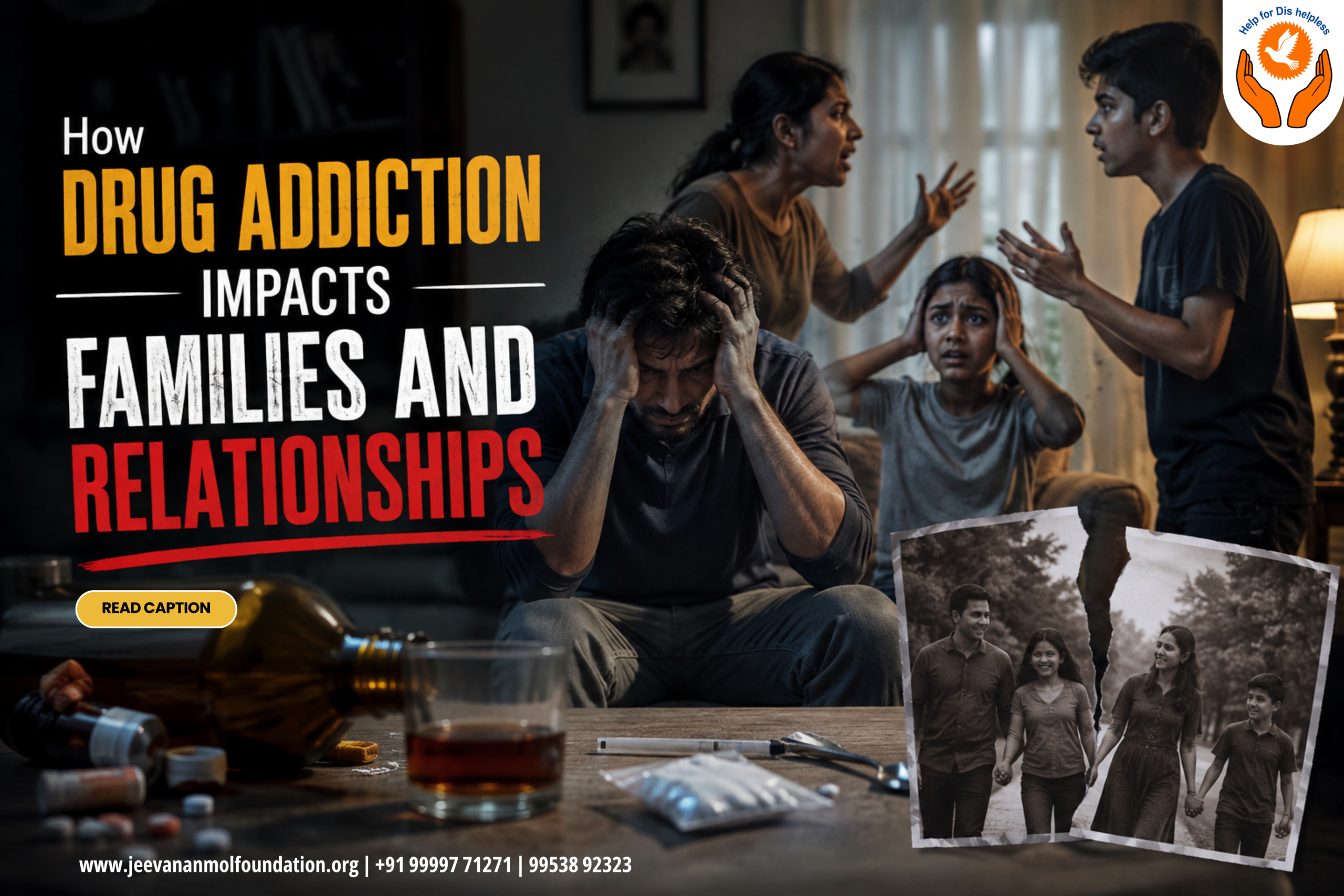
How Drug Addiction Impacts Families and Relationships
Drug addiction is often described as a problem affecting the person who uses drugs. But the reality is much bigger. Addiction can affect an entire family. It can change the way spouses communicate, damage the trust between parents and children, create financial pressure, and turn a peaceful home into an environment of constant fear and uncertainty.
Families may spend years trying to understand what is happening. They may cover up the person’s behaviour, give them money, make excuses for missed responsibilities, or repeatedly promise themselves that things will improve. Meanwhile, addiction can continue affecting everyone’s physical, emotional, social, and financial well-being.
Understanding these effects is important because recovery isn’t only about helping an individual stop using drugs. It is also about helping families rebuild trust, communication, stability, and healthy relationships.
What Happens to a Family When Someone Develops Drug Addiction?
Drug addiction can gradually change family dynamics.
In the beginning, relatives may notice small changes in behaviour. The person may become secretive, irritable, absent from home, or increasingly focused on obtaining and using drugs.
As substance use becomes more frequent, the family may begin experiencing:
- Frequent arguments
- Broken promises
- Loss of trust
- Financial difficulties
- Emotional distance
- Neglect of responsibilities
- Social isolation
- Constant worry about the person’s safety
- Stress about what might happen next
The family may start organizing its entire routine around the addiction.
1. Loss of Trust
One of the biggest consequences of addiction is the breakdown of trust.
A person struggling with addiction may lie about:
- Where they have been
- Who they are spending time with
- How much they are using
- How much money they need
- Whether they have stopped using
They may repeatedly promise, “I won’t do it again,” but continue using drugs.
After hearing these promises repeatedly, family members may stop believing them.
This creates a painful cycle:
Drug use → lying → broken promise → loss of trust → conflict → guilt/stress → further drug use.
Rebuilding this trust takes time. It usually requires consistent behaviour, professional support, open communication, and patience.
2. Constant Stress and Emotional Exhaustion
Living with addiction can be emotionally exhausting.
Parents may constantly wonder:
“Where is my child?”
A spouse may worry:
“Will they come home safely?”
Siblings may think:
“What is going to happen to our family?”
This uncertainty can create ongoing stress.
Family members may experience:
- Anxiety
- Anger
- Fear
- Frustration
- Sadness
- Helplessness
- Guilt
- Emotional exhaustion
Sometimes the family becomes so focused on managing the addicted person’s behaviour that they neglect their own emotional needs.
3. Impact on Marriage and Romantic Relationships
Drug addiction can place enormous pressure on a marriage.
A spouse may feel ignored, betrayed, or emotionally abandoned. Responsibilities that were previously shared may fall almost entirely on one person.
Common relationship problems include:
- Frequent arguments
- Lack of emotional intimacy
- Financial disputes
- Broken commitments
- Loss of companionship
- Reduced communication
- Suspicion and mistrust
Over time, the relationship may become less about partnership and more about managing crises.
Professional treatment and family counselling can help couples understand the underlying issues and establish healthier communication patterns.
4. Impact on Children
Children can be particularly vulnerable when a parent struggles with drug addiction.
Even when parents try to hide the problem, children may notice:
- Arguments at home
- Changes in behaviour
- Financial problems
- Emotional instability
- Absence of a parent
- Unpredictable household routines
A child may feel confused and may even believe that they are somehow responsible for the situation.
Older children may become withdrawn, angry, or overly responsible for household matters.
This is why children in families affected by addiction also need emotional support and reassurance.
They need to understand that the addiction is not their fault.
5. Financial Problems
Drug addiction can create significant financial pressure.
As substance use continues, money may increasingly be spent on drugs rather than essential needs.
Families may experience:
- Unpaid bills
- Borrowing and debt
- Missing household money
- Loss of savings
- Problems paying school fees
- Job loss or reduced income
- Selling personal belongings
Financial stress can then create additional arguments within the family.
In some cases, relatives may repeatedly provide money because they believe they are helping. However, giving money without addressing the underlying addiction may unintentionally allow the problem to continue.
Families need to learn the difference between supporting recovery and enabling addiction.
6. Communication Begins to Break Down
Healthy families depend on honest communication.
Addiction can replace open conversations with:
- Accusations
- Arguments
- Silence
- Threats
- Defensiveness
- Secrecy
Family members may stop discussing important issues because they are afraid of triggering another argument.
The person struggling with addiction may also avoid conversations because they feel ashamed or judged.
Eventually, everyone starts avoiding the real problem.
Professional family counselling can provide a safer environment where these issues can be discussed constructively.
7. Social Isolation
Families affected by addiction may gradually withdraw from society.
They may avoid:
- Family functions
- Weddings
- Social gatherings
- Friends
- Neighbours
- Community activities
Parents may feel embarrassed about their child’s behaviour. A spouse may avoid talking about problems because of fear of judgment.
This isolation can make the situation even harder.
Instead of receiving support, the family may suffer privately.
Addiction should not be treated as something the family needs to hide forever. Seeking appropriate professional support is a responsible step, not something to be ashamed of.
8. Anger, Resentment and Blame
As problems continue, family members can develop resentment.
A parent might think:
“After everything we’ve done, why won’t you stop?”
A spouse might feel:
“You care more about drugs than you care about our family.”
The person struggling with addiction may respond with anger or defensiveness.
This creates a cycle where everyone feels misunderstood.
Blame rarely solves addiction.
The family needs to recognize that compassion does not mean accepting destructive behaviour, and setting boundaries does not mean abandoning the person.
9. The Family May Start Enabling the Addiction
This is an important issue that many families don’t recognize.
Enabling means doing things that unintentionally make it easier for the addiction to continue.
Examples may include:
- Giving money repeatedly
- Making excuses for missed work
- Covering up the person’s behaviour
- Lying to relatives or employers
- Paying debts without addressing the underlying issue
- Ignoring repeated warning signs
Families usually enable addiction because they want to protect their loved one.
But protection without treatment can sometimes delay recovery.
The healthier approach is to provide support while maintaining appropriate boundaries.
10. Addiction Can Change Family Roles
In a healthy family, responsibilities are generally shared.
Addiction can change these roles dramatically.
For example:
- A spouse may become responsible for everything.
- Children may take on responsibilities beyond their age.
- Parents may constantly monitor an adult child’s behaviour.
- Siblings may become caregivers.
- One family member may become responsible for managing finances.
This imbalance can create resentment and exhaustion.
Recovery involves restoring healthier family roles—not simply stopping substance use.
11. Physical and Mental Health of Family Members
The effects of addiction can extend beyond relationships.
Long-term family stress may affect sleep, concentration, emotional well-being, and everyday functioning.
Family members may constantly remain alert for another crisis.
They may also experience feelings of:
- Hopelessness
- Anxiety
- Sadness
- Anger
- Emotional burnout
That’s why family members also need support during the recovery process.
Taking care of yourself isn’t selfish. A healthier family environment can make it easier to support the person undergoing treatment.
How Addiction Affects the Person With Addiction
It’s equally important to understand what the individual may be experiencing.
Drug addiction can affect:
Physical Health
Substance use may damage different organs and increase the risk of serious health complications.
Mental Well-Being
Some individuals may experience anxiety, depression, mood changes, paranoia, or other psychological difficulties.
Decision-Making
Addiction can influence judgment and make obtaining and using the substance increasingly important.
Career and Education
Repeated substance use may contribute to absenteeism, poor concentration, declining performance, or loss of employment or educational opportunities.
Relationships
As addiction progresses, relationships may become secondary to substance use.
This is why simply telling someone to “use willpower and stop” often isn’t enough.
Professional treatment addresses the addiction as a health condition and helps the individual develop healthier ways of coping.
How Families Can Support Recovery
Families can play an important role in recovery, but they cannot recover on someone else’s behalf.
Here are some healthier approaches.
1. Encourage Professional Help
Instead of repeatedly arguing about drug use, encourage the person to speak with a qualified doctor, counsellor, or de-addiction professional.
A professional can assess the situation and recommend an appropriate treatment approach.
2. Communicate Without Humiliation
Avoid publicly shaming the person.
Instead of:
“You’ve destroyed our family.”
Try:
“We are worried about you and want to help you get your life back.”
The goal is to communicate concern without ignoring the seriousness of the problem.
3. Set Healthy Boundaries
Supporting someone doesn’t mean accepting everything they do.
Families may need clear boundaries around:
- Money
- Aggressive behaviour
- Substance use inside the home
- Responsibilities
- Treatment participation
Boundaries should be communicated calmly and consistently.
4. Participate in Family Counselling
Addiction affects relationships, and relationships often need healing.
Family counselling can help members:
- Communicate more effectively
- Understand addiction
- Rebuild trust
- Manage conflict
- Establish boundaries
- Support long-term recovery
5. Avoid Expecting Instant Change
Recovery takes time.
Even after rehabilitation, individuals may need continued counselling and support.
Families should focus on consistent progress rather than expecting everything to return to normal immediately.
What Happens After Rehabilitation?
Completing a rehabilitation programme is an important milestone, but it is not necessarily the end of recovery.
Returning home can bring new challenges.
The person may encounter:
- Old friends
- Previous environments
- Stress
- Emotional triggers
- Social pressure
- Cravings
Families can help by encouraging healthy routines and continuing professional follow-up where recommended.
A structured lifestyle, supportive relationships, counselling, and relapse-prevention planning can all contribute to long-term recovery.
Can Relationships Be Rebuilt After Addiction?
Yes, but rebuilding relationships takes time.
Trust cannot be demanded. It has to be earned through consistent actions.
A person in recovery may need to demonstrate over time that they are:
- Keeping commitments
- Communicating honestly
- Taking responsibility
- Following their treatment plan
- Maintaining healthier habits
- Respecting family boundaries
Likewise, family members may need support to process years of anger, fear, disappointment, or mistrust.
Recovery isn’t simply about forgetting the past. It’s about building a healthier future.
When Should a Family Seek Professional Help?
Don’t wait until the situation becomes a major crisis.
Consider seeking professional guidance when:
- Drug use is becoming frequent
- The person cannot stop despite trying
- Family relationships are deteriorating
- Work or education is being affected
- Money is regularly being spent on drugs
- The person experiences withdrawal symptoms
- There is aggressive or dangerous behaviour
- Previous attempts to quit have failed
- The family no longer knows how to respond
If there is an immediate medical emergency, overdose, severe withdrawal, unconsciousness, or risk of harm, seek emergency medical assistance immediately.
Final Thoughts
Drug addiction doesn’t affect only the person using drugs. It can affect the entire family system—trust, communication, finances, emotional health, marriage, parenting, and social relationships.
But families should not lose hope.
Recovery is possible, and relationships can heal with the right combination of professional treatment, counselling, family involvement, boundaries, and continued support.
The most important step is often the first one: recognizing that there is a problem and asking for professional help.
If someone you love is struggling with drug addiction, don’t wait for the situation to become irreversible. A compassionate conversation and timely professional support can be the beginning of recovery—for the individual and the family together.
Frequently Asked Questions
Does drug addiction affect the whole family?
Yes. Addiction can affect family relationships, communication, finances, emotional well-being, household responsibilities, and social life.
Can family members help someone overcome addiction?
Family support can be extremely valuable, but addiction usually requires professional assessment and treatment. Families should support recovery without trying to manage the entire condition themselves.
Should I give money to someone struggling with drug addiction?
Giving money without boundaries can sometimes enable continued substance use. Families should discuss financial boundaries with a qualified professional and focus on supporting treatment and recovery.
Can a marriage survive drug addiction?
Yes. Many relationships can recover, but rebuilding trust and communication takes time. Professional treatment and family or couples counselling can be helpful.
What should I do if my loved one refuses rehabilitation?
Avoid threats, humiliation, and constant arguments. Choose a calm time to express your concern and encourage them to speak with a qualified addiction professional. If there is an immediate risk of harm or medical emergency, seek urgent professional assistance.
Is relapse a failure of treatment?
Not necessarily. Addiction can involve periods of improvement and setbacks. A relapse should be taken seriously and addressed with professional support rather than treated as proof that recovery is impossible.

Recent Posts
When Did Pokies Come To New Zealand
Slots Villa Casino Login
All Categories
Get the Support You Need
Professional guidance, counselling & compassionate support for a healthier, addiction-free life.